





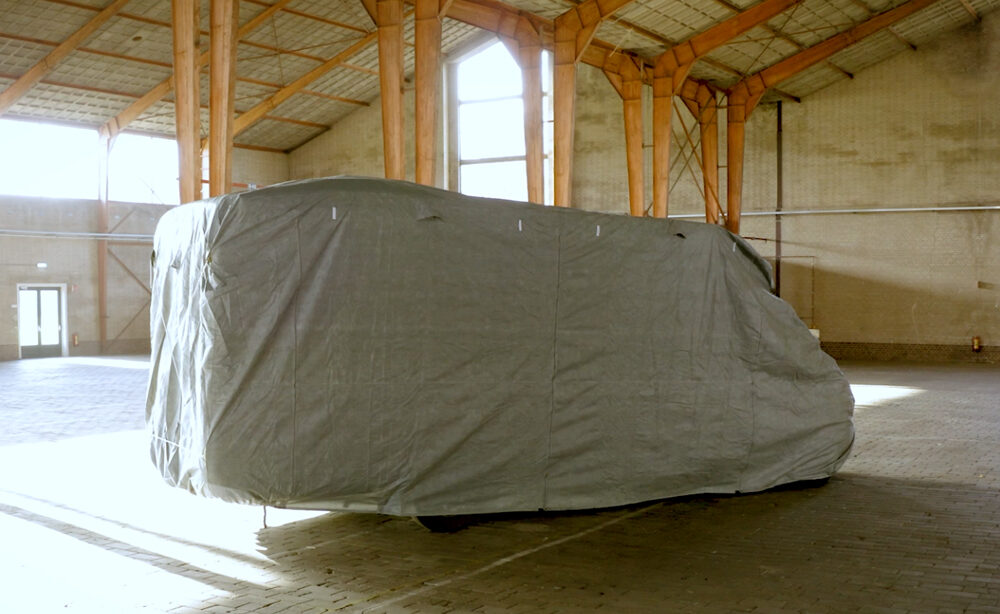
Indoor Motorhome Cover
Most motorhomes spend a large part of the year in storage, waiting for the next trip. If your motorhome is stored indoors, using a good indoor motorhome cover is certainly worthwhile. Even in covered storage, dust, condensation and bird droppings can affect the condition of your motorhome. A suitable motorhome cover provides additional protection and helps preserve both the value and lifespan of your vehicle. In this article, we explain the main benefits of an indoor motorhome cover, what to look for when buying one and how to keep the cover in good condition for as long as possible.

Why use an indoor motorhome cover?
Dust and dirt: Dust often circulates inside storage facilities and can accumulate both on and inside your motorhome. Birds such as swallows are also common in motorhome storage facilities, and their acidic droppings can damage the paintwork. A motorhome cover prevents dust and bird droppings from settling directly on the vehicle.
Minor damage: In a shared storage facility, other vehicles being moved or work being carried out nearby can cause small scratches or minor damage. A motorhome cover acts as an additional protective layer and helps reduce the risk of scratches and small dents.
Exterior finish: Even when a motorhome is not exposed to direct sunlight, its exterior finish can gradually become dull over time. A good protective cover helps prevent discolouration of various materials and keeps painted and plastic surfaces looking their best.

What to look for in a motorhome cover
1. Breathable material: A good motorhome cover should be made from breathable material and/or feature ventilation openings. This allows moisture to escape from underneath the cover and helps minimise condensation and mould.
2. Easy access: Some motorhome covers feature zip openings on one or both sides, allowing you to easily access the motorhome while the cover remains in place.
3. Easy and secure fastening: A motorhome cover should be easy to secure around the vehicle. Strong elasticated edges, adjustable straps underneath the motorhome and tensioning options at the front and rear help create a neat and secure fit.
Tips for use and maintenance
A motorhome cover will last longer and provide the best possible protection when it is used and maintained correctly. Here are a few practical tips:
Fitting the cover
Make sure the motorhome is clean and completely dry before fitting the cover. Dirt and moisture trapped underneath can otherwise encourage the formation of algae or mould. Remove as many protruding or sharp parts as possible, such as antennas, or protect them with foam or similar material to prevent damage to the cover. Having a household stepladder nearby also makes fitting the motorhome cover considerably easier.
Maintenance
Remove the cover occasionally to check that no moisture problems are developing underneath it. Clean the cover when necessary using lukewarm water and, if required, a mild soap. Avoid aggressive cleaning products and hard brushes. Always allow the cover to dry completely before folding it and storing it in a dry place.
Conclusion
Using a motorhome cover during indoor storage certainly has its advantages. It protects your motorhome against dust, moisture and minor damage while helping to keep the exterior finish in good condition. By choosing a breathable, well-fitting cover with convenient access openings, your motorhome will remain protected and ready for use when it is time for your next trip.
Motorhome products

STAR bicycle carrier cover

Signal plate

Luggage binder set
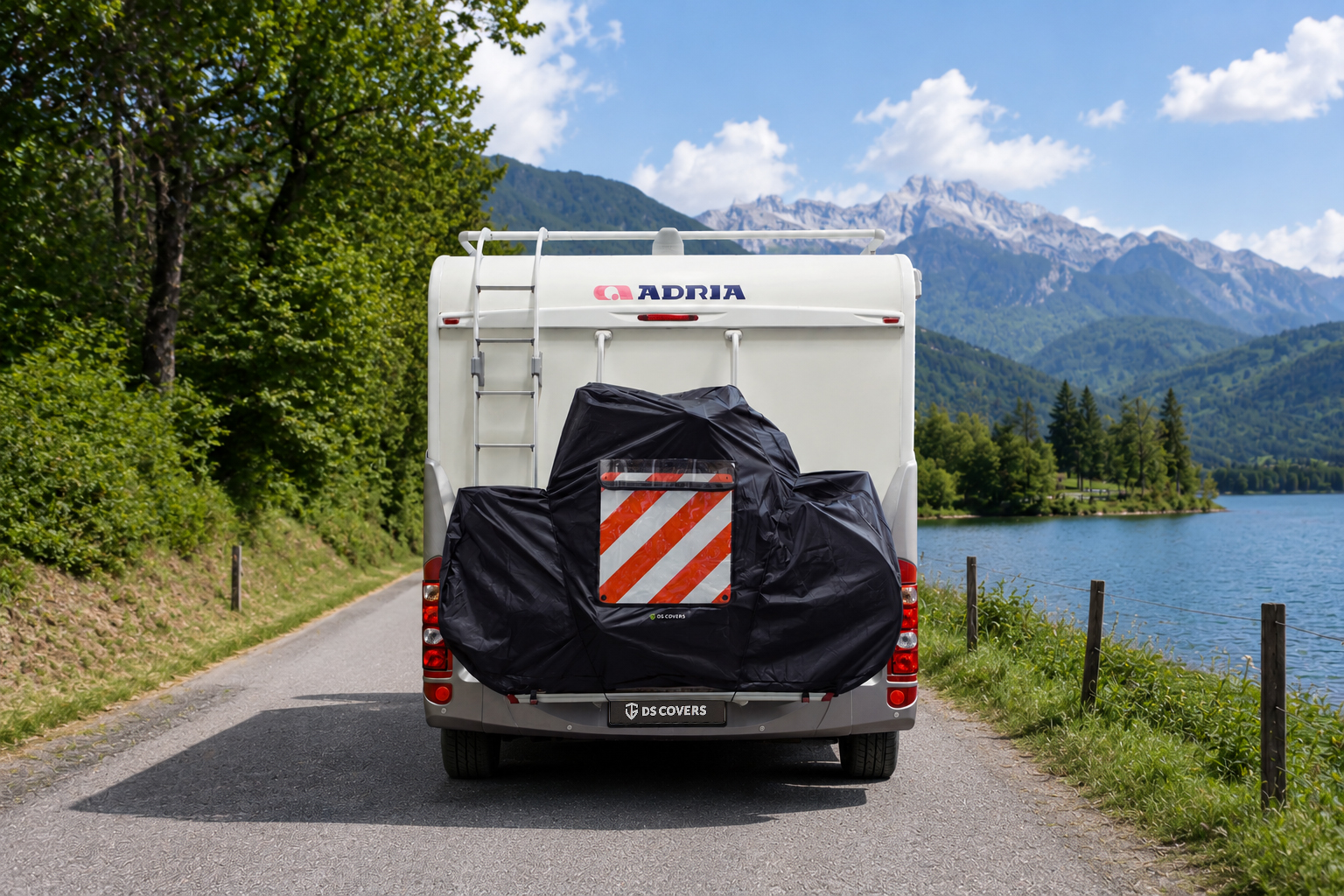
EAGLE II bicycle carrier cover